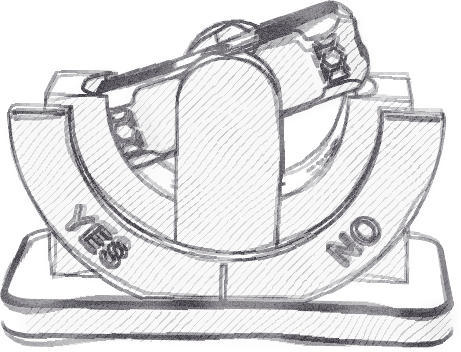
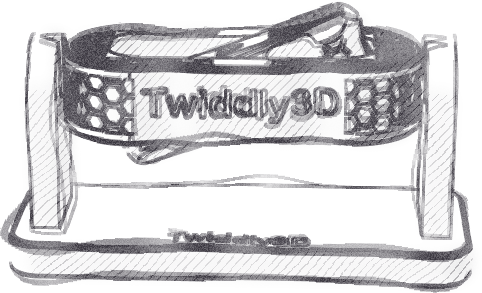
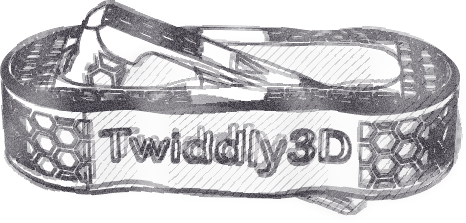
Flip it.
It clicks back.

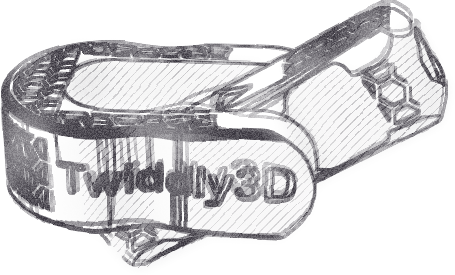
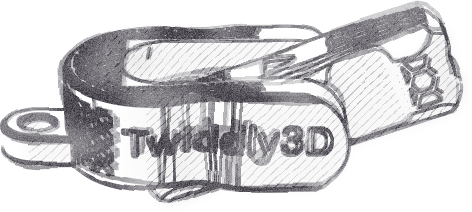
A rotor on two small cone pivots, a magnet at each end, printed as one piece. Every half turn it snaps into place with a click you can feel.

Tap or swipe the spinner

How the click works

  1. 1

    One print, no assembly

    Frame and rotor come off the printer already joined. They are modelled 0.5 mm apart at the sides, so the rotor turns freely from the first flick.

  2. 2

    Two small cone pivots

    The rotor rides on a pair of pointed cones, Ø5.6 mm at the base, sitting in matching sockets with about 0.3 mm of play. A small contact point means less friction and a longer spin.

  3. 3

    Magnets pressed and glued

    Each Ø8 × 3 mm magnet goes into an eight-sided pocket 7.9 mm across the flats. The flat sides hold it square and centred while a drop of glue sets, so every magnet sits at the same depth.

  4. 4

    Close enough to snap

    When the rotor lines up, the magnet faces sit 3.1 mm apart. That is close enough to pull the rotor into place, and far enough apart that a flick carries it past.

Drawn from the production model, dimensions in mm

Busy hands, quieter head

Fidgeting is not a bad habit to train away. For a lot of people it is how they stay calm and present. The trick is giving it a good outlet.

Somewhere for restless hands

Long calls, slow loading bars, waiting rooms. Many people think better when their hands have something small to do. A flip and a click gives them that without taking your eyes off the work.

A pause you can feel

When the day gets loud, a few slow flips give you a moment that belongs only to you. The rhythm is simple: flick, click, breathe. Nothing to win, nothing to finish.

A better habit to reach for

Pen clicking, nail biting, scrolling the phone for no reason. A spinner on the desk is an easy swap: it keeps your hands busy, your phone face down and your colleagues happy.

Quiet focus

One soft click per half turn, so it works in shared offices and classrooms. The magnets give every flip a clear ending, which makes it oddly satisfying to repeat.

A fidget is a small everyday comfort, not a medical device or a treatment. If stress or anxiety is weighing on you, talking to someone you trust or a professional helps more than any desk toy.

Three magnet sizes, each with its own pocket

Every spinner is built around one of three neodymium disc magnets. The pocket is sized for that magnet alone, from fit tests printed and pushed in by hand, so it seats snugly and sits square before it is glued in.

Magnet size
Ø8 × 3 mm
Pocket, across flats
7.9 mm
Magnet sits back from the edge
1.0 mm
Gap between magnet faces
3.1 mm

A fork frame takes 3 magnets, a ring frame takes 4.

Section through the pocket axisframe / rotor
3.1 mm between facesØ7.91.0 mm recess
  1. 1

    Turn the rotor 90° so the pockets face you.

  2. 2

    Add a drop of glue and push each magnet to the bottom with a flat tool.

  3. 3

    Check polarity first: frame magnets must attract the rotor ends.

Honeycomb

14 patterns, top to sides

Each pattern is cut into the top and bottom of the rotor and runs as a band along its sides. Your thumb finds the texture before your eyes do. The bottom of the hub has a circle, the top a triangle, so every flip is also a coin toss.

Colour

Half a turn, then it lands

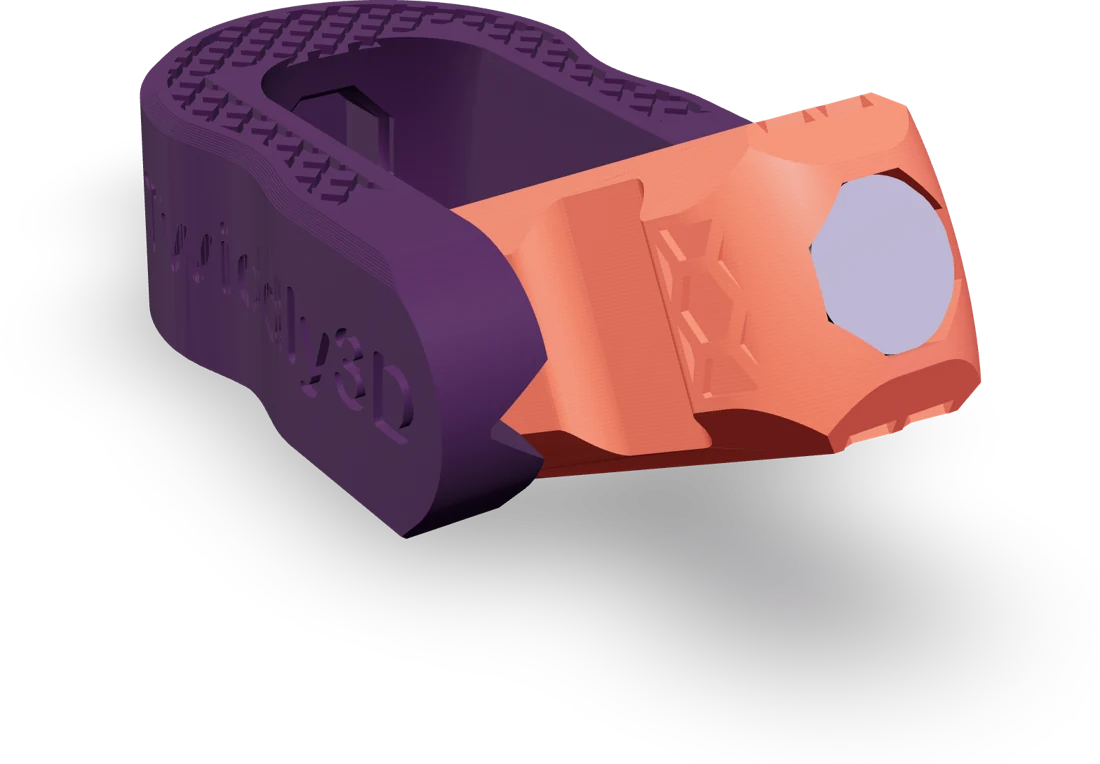
Rendered from the same files we print from. The rotor settles with a small wobble as the magnets pull it into line, the same way it does in your hand.

A home for every rotor

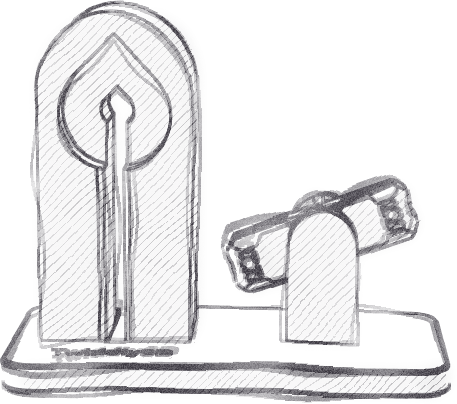
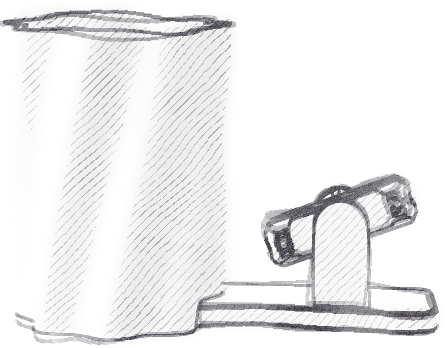
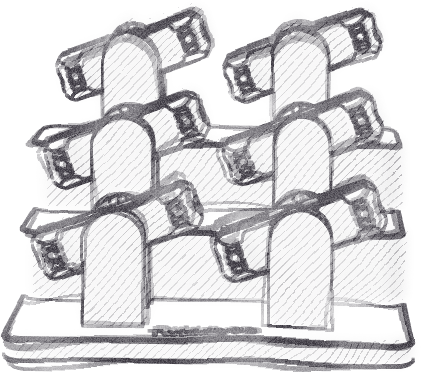
A separately printed rotor plugs into any of 60 accessories, from pen cups to keychains, and comes out again whenever you like. Same pivot, same magnets, same click. Select one to turn it around.

How a pen habit became a spinner

The short version of a long series of prints.

  1. Chapter 1

    The pen that wouldn't stop clicking

    It started in a small shared studio, with a colleague who clicked a ballpoint pen through every phone call. Nobody minded the habit, only the noise. We wanted something that gave the same small satisfaction, quietly, and that you could not lose down the side of a chair.

  2. Chapter 2

    A rotor on a bolt

    The first one was a strip of plastic on an M3 bolt. It spun, it rattled, and it never stopped in the same place twice. Adding a magnet to each end changed everything: now it had somewhere to land. The click was the point all along.

  3. Chapter 3

    Printing it in one go

    Bolts meant assembly, and assembly meant a drawer full of spare parts. So we redrew it until frame and rotor could come off the printer already joined, turning on two tiny cones with a gap thinner than a fingernail. Dozens of prints went in the bin before the first one spun on its own.

  4. Chapter 4

    A week for a tenth of a millimetre

    A loose pocket lets a magnet sit crooked, and a crooked magnet gives a lazy click. We printed test blocks with five pockets each, every one a tenth of a millimetre tighter than the last, and pushed magnets in by thumb until one size held them dead square. Each magnet size got its own number, and a drop of glue does the rest.

  5. Chapter 5

    Then everyone wanted one

    Friends asked for one, then their friends did. The rotor learned to plug into a pen cup, a phone stand, a keychain. Today every spinner is still designed with the same care, printed on our own 3D printers, checked and packed at one desk, and sent out through our Etsy shop.
Find us on Etsy

Our whole range lives in our Etsy shop: spinners in 14 patterns and 10 PLA colours (translucent ones included), three magnet sizes, and 60 accessories to plug a rotor into. Checkout, shipping and reviews are all handled by Etsy.

Visit the Twiddly3D shop
Keychain flip spinner

Questions we get

Will the magnets fall out?

No. Each magnet is pressed into an eight-sided pocket sized for that exact magnet and glued in place, so it stays put through normal use.

Ring frame or fork frame?

The ring frame has a magnet at both ends, so the rotor is held on both sides and the click is stronger. It comes in one colour, frame and rotor alike. The fork frame has one magnet, which gives a lighter click and a slimmer shape, and you can pick the frame and rotor colours separately.

Does it help with stress?

Many people find that keeping their hands busy helps them stay calm and focused, and a slow flip-and-click is a nice way to take a short pause. It is a small comfort, though, not a treatment. If stress is weighing on you, please talk to someone.

What is it made of?

PLA, printed in 0.2 mm layers. You can see and feel the fine layer lines on the surface. The translucent colours are PLA too, so light passes through and you can see the magnets inside.

Is it loud?

Each half turn makes one soft click as the rotor lands. It is quieter than a pen clicker, though you will hear it in a silent room.

Can I move a rotor between accessories?

Yes. Plug-in rotors slide out of one accessory and into another. The spinners themselves are printed in one piece and their rotors stay where they are.

Is it suitable for children?

No. It contains small, strong neodymium magnets that are dangerous if swallowed. Keep it away from young children and pets.